
Do You Need a Permit for a Pool, Patio, or Outdoor Living Project in Northern Michigan?

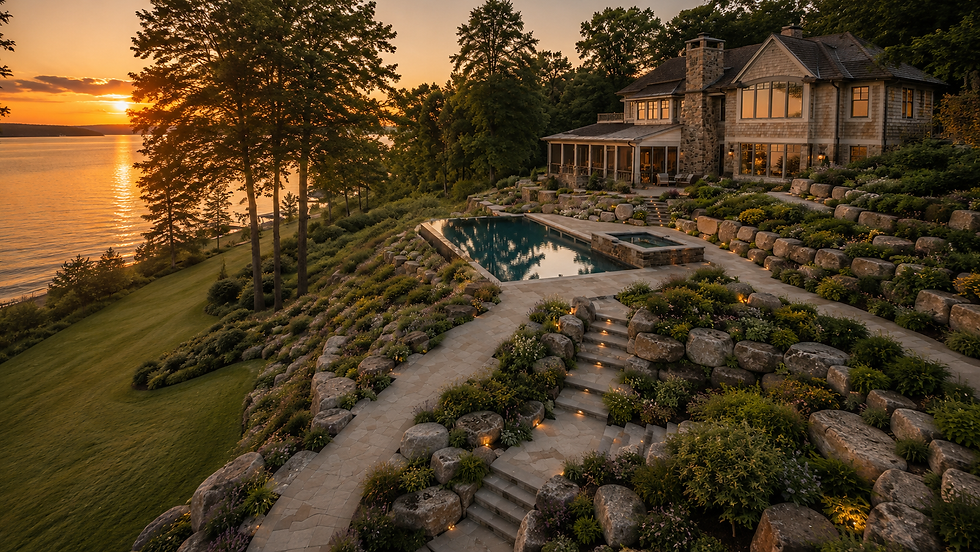
If you are planning a pool, spa, patio, retaining wall, outdoor kitchen, or larger outdoor living project in Traverse City or Northern Michigan, one of the first questions is usually:
Do we need a permit for this?
The honest answer is: sometimes yes, sometimes no, and often more than one permit may be involved.
That can sound intimidating, but it does not have to be. Permitting is simply part of making sure the project is safe, properly located, and built in a way that protects the property, nearby water, and surrounding landscape.
Around Traverse City, Old Mission Peninsula, Leelanau County, Elk Rapids, Suttons Bay, Glen Arbor, Torch Lake, and other Northern Michigan communities, outdoor projects often involve more than just the visible finished space. There may be grading, drainage, utilities, electrical work, pool equipment, retaining walls, lakefront considerations, or soil erosion requirements.
That is why it is important to understand permitting early, before construction begins.
Why permits matter for outdoor living projects
A permit is not just paperwork. It helps confirm that the project follows local zoning, building, safety, and environmental requirements.
For homeowners, this matters because the design may need to account for:
Setbacks from property lines
Distance from lakes, wetlands, or slopes
Pool barrier and safety requirements
Electrical and plumbing work
Retaining wall construction
Soil disturbance, stormwater and erosion control
Location of existing septic systems, wells, utilities, or easements
A beautiful design still needs to work with the rules of the property.
The earlier these items are reviewed, the easier it is to make smart decisions.

Pool permits in Michigan
For inground pools, permits are generally required in Michigan.
Many municipalities require at minimum a building permit and an electrical permit for an inground swimming pool. Depending on the project and local rules, other approvals may also apply, such as zoning, soil erosion, mechanical permits for gas heaters, fence permits, or other site-specific permits.
Pools and spas also involve safety requirements. Residential pool and spa guides in Michigan commonly reference compliance with the Michigan Residential Code and the International Swimming Pool and Spa Code.
That means the pool itself is only one part of the review. The surrounding barrier, electrical bonding, equipment, access, and inspections may all matter.
Do spas and hot tubs need permits?
In many cases, yes.
A spa or hot tub may require permits depending on whether it is built-in, permanent, connected to electrical circuits, gas, plumbing, or part of a larger outdoor construction project.
Some Michigan residential pool and spa guides state that building permits are required for swimming pools, hot tubs, and spas capable of maintaining a water depth of 24 inches or more, and electrical permits are required when electrical circuits are installed.
This is especially important for custom spas, gunite spas, built-in spas, or spas tied into a larger pool and patio design.
What about patios and hardscapes?
A simple patio may not always require a building permit, but that does not mean every patio project is permit-free.
Permits may become part of the conversation when the project includes:
Major grading or significant soil disturbance
Retaining walls
Stairs or structures
Outdoor kitchens
Gas or electrical work
Work near lakes, wetlands, steep slopes
Drains, or changes to drainage patterns
In other words, a small patio on a flat yard is very different from a large natural stone patio built into a lakefront slope with boulder walls, steps, lighting, and outdoor kitchen utilities.
Soil erosion permits in Grand Traverse County
Soil erosion is a big one in Northern Michigan, especially near water.
Grand Traverse County’s Soil Erosion and Sedimentation Control Program exists to protect wetlands, surface water, and the environment from the impacts of earth changes.
Grand Traverse County also notes that, in addition to State of Michigan requirements, the county has a Soil Erosion Ordinance requiring a permit when a project is within 500 feet of a regulated wetland, disturbs slopes of 20% or greater, is within 500 feet of a county drain, or involves Group D hydrologic soils.
For homeowners near lakes, wetlands, ravines, steep slopes, or drainage corridors, this can be a major part of the planning process.
Retaining walls, steps, and grade changes
Boulder retaining walls, natural stone steps, and terraced patios are common in Traverse City and Northern Michigan because so many properties have slope.
These features can make a yard more usable and beautiful, but they may also trigger additional review depending on height, location, structure, drainage, and local requirements.
A retaining wall is not just a row of boulders. It may need proper excavation, base preparation, drainage stone, fabric, drain tile, compaction, and careful placement.
When walls are part of a pool, patio, or outdoor living project, it is best to review them early in the design process.
Outdoor kitchens, gas, and electrical work
Outdoor kitchens often involve more than cabinetry and countertops.
If the project includes a built-in grill, gas line, lighting, outlets, refrigerator, sink, plumbing, or other utilities, additional permits or inspections may be required.
This is one of the reasons a complete outdoor living project should be planned as one system. The patio, kitchen, gas, electric, drainage, and layout all need to work together.
It is much easier to plan these items before the stone is installed than to add them later.

Pool barriers and safety covers
Pool safety is another permitting consideration.
Residential pools and spas often need to meet barrier requirements, which may include fencing, gates, approved covers, alarms, or other safety measures depending on the municipality and pool design.
Some Michigan pool and spa guides state that residential pools, hot tubs, or spas should not be filled with water until barrier requirements are completed.
This is why pool planning should include not only the pool shape, but also how the space will be secured, accessed, and finished.
What information is usually needed for permits?
Requirements vary by township, city, county, and project type, but permit applications often ask for some combination of:
Site plan or plot plan
Property lines and setbacks
Pool or spa location
Patio and retaining wall locations
Equipment location
Fencing or barrier information
Electrical and gas/plumbing information
Grading or drainage notes
Soil erosion controls if applicable
Contractor information
Construction drawings or manufacturer specifications
Grand Traverse County’s building permit process notes that building permit applications may require items such as land use approval and soil erosion permits when applicable.
For more custom projects, especially pools and spas, drawings and details can matter.
Why design should happen before permitting
One of the biggest mistakes homeowners make is trying to rush into permits before the design is clear.
A permit application needs to show what is being built and where it is going. If the pool moves, the patio changes, the retaining wall grows, or the outdoor kitchen shifts, the permit documents may need to be updated.
That is why a thoughtful design process helps.
A 3D landscape design and site plan can help clarify:
Where the pool sits
How the patio connects to the house
Where walls and steps are needed
How grade changes are handled
Where equipment and utilities go
How people move through the space
How the finished project fits the property
The goal is not just to get a permit.
The goal is to design a project that can actually be built well.
Every township can be different
This is important: permitting requirements are local.
A project in Traverse City may not follow the exact same process as a project in Peninsula Township, Elmwood Township, Suttons Bay, Glen Arbor, Elk Rapids, or another Northern Michigan community.
Even within the same general region, requirements can change based on zoning district, property size, shoreline location, wetlands, slopes, septic, wells, and project scope.
So while this blog gives a general overview, homeowners should always verify requirements with the local township, county, building department, or permitting authority.
The best time to think about permits
The best time to think about permits is before the project is scheduled.
Permits can affect the timeline, especially during the busy spring and summer construction season. If a project needs zoning review, soil erosion approval, engineering, pool drawings, electrical permits, or building department review, those steps can take time.
Starting early gives the design and permitting process room to breathe.
It also helps avoid the frustration of having a beautiful design ready, but not being able to start because a required approval was not considered early enough.
A better project starts with a better plan
Permitting may not be the most exciting part of an outdoor living project, but it is one of the most important.
For a custom pool, spa, patio, boulder retaining wall, outdoor kitchen, or lakefront landscape project, the best results usually come from planning the whole space before construction begins.
At Serene Stonescapes, we help homeowners think through the design, layout, materials, site conditions, and construction sequence so the finished project feels intentional, natural, and built for Northern Michigan.
If you are planning a pool, patio, retaining wall, spa, or outdoor living space in Traverse City or Northern Michigan, it is worth asking about permits early.
The smoother the planning process, the better the finished space.
FAQ Section
Do I need a permit for an inground pool in Traverse City?
Most inground pool projects in Michigan require permits, commonly including a building permit and electrical permit. Depending on the location and scope, zoning, soil erosion, fence, mechanical, or other permits may also apply.
Do I need a permit for a patio in Northern Michigan?
A simple patio may not always require a building permit, but permits may be needed if the project includes significant grading, retaining walls, utilities, outdoor kitchens, drainage changes, or work near lakes, wetlands, slopes, or drains.
What is a soil erosion permit?
A soil erosion permit helps regulate earth changes so soil and sediment do not wash into wetlands, lakes, streams, drains, or neighboring properties. Grand Traverse County’s program is designed to protect wetlands, surface water, and the environment from adverse impacts caused by earth changes.
Do pool projects need fencing or barriers?
Residential pools and spas often need approved barriers, fencing, safety covers, or other safety measures depending on the municipality and pool design. Local building officials should confirm the specific requirements for each project.
Should I design my outdoor space before applying for permits?
Yes. A clear design helps show where the pool, patio, retaining walls, steps, equipment, and utilities will go. This can make the permitting process smoother and reduce the chance of redesigning after review.


Comments